

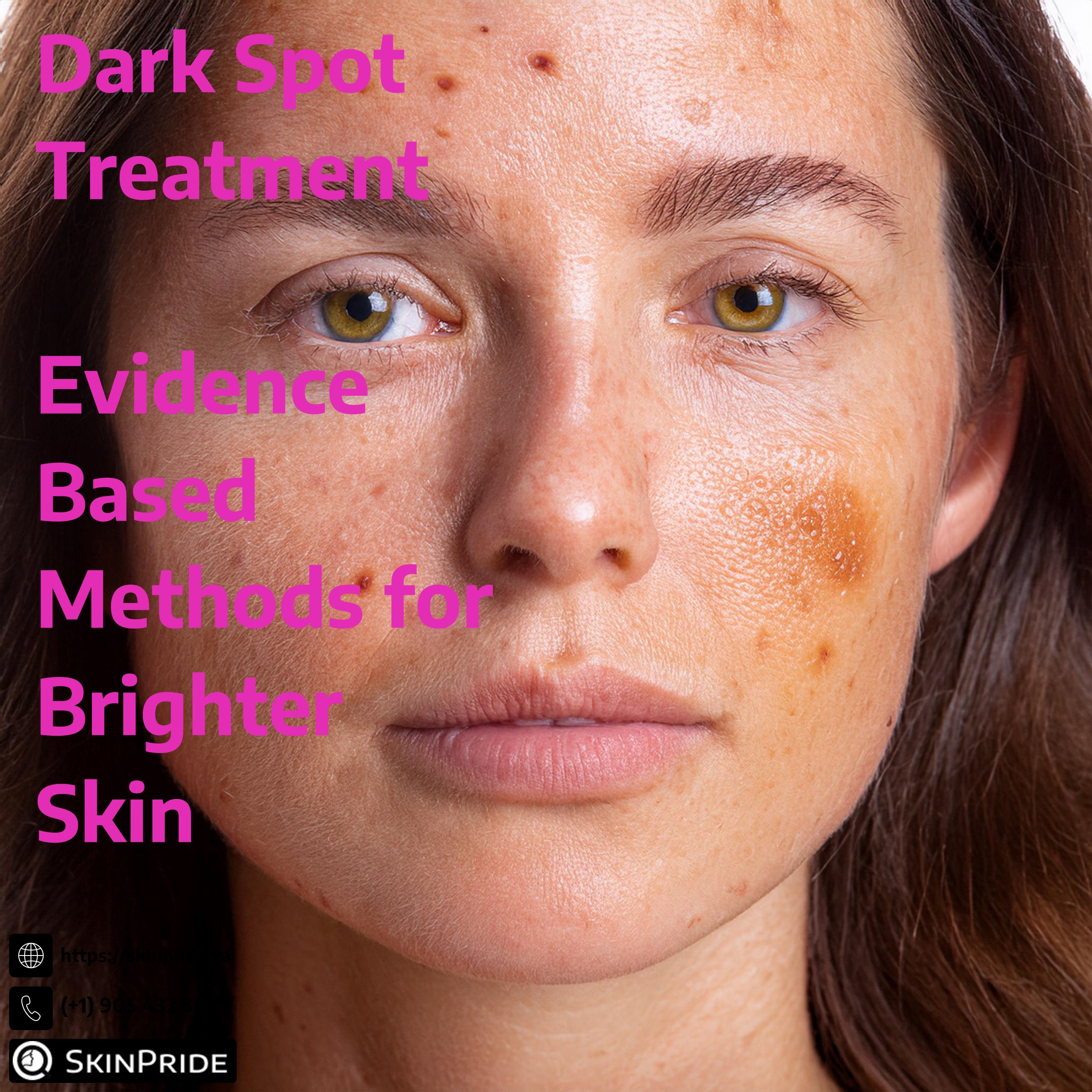
Dark Spot Treatment: Evidence-Based Methods for Brighter Skin
Dark spots often seem like skincare’s ultimate mystery. You attempt creams, serums, and regimens, and yet somehow still they persist—causing your skin to appear blotchy and tired regardless of how hard you try. The reality? It’s not necessary to stock up on a shelf full of products or chase the latest trends in order to notice improvements. What really works is a gentle, consistent routine based on science, patience, and smart choices. Here in this guide, we’re going to break down what ingredients really do something, the most essential daily habits, and how technology—yes, even artificial intelligence—is transforming the way we care for our skin.
Why We Get Dark Spots—and Why They're So Resistant
You wonder to yourself: Why me? Why do those tiny patches of darker color appear and refuse to leave even after your acne has cleared or summer has passed? It’s all about melanin. It’s the natural pigment your skin makes. When your skin is inflamed, irritated, or otherwise damaged—like by acne, sun, or even an insect bite—it can produce too much melanin in that spot. That’s what hyperpigmentation is.
Some people are more prone to dark spots. If you have dense melanin skin, you can expect dark spots to stick around longer. Hormonal changes, such as during pregnancy or birth control use, can also bring on a type of dark spot called melasma. And let’s not forget sun damage—those little freckles that were cute in your 20s will become sunspots in your 30s and 40s.
Can You Truly Get Rid of Dark Spots Without Harsh Treatments?
This is the elephant in the room, right? You’ve probably seen all the creams and “hacks” on social media. Some are promising results overnight, some sound dodgy or untested. So let’s talk about what actually works. The secret is that skin heals slowly, and the right treatments don’t eliminate spots; they keep new ones from happening.
The Real-Life Skincare Routine That Works
Now, prevention. Because while you’re being kind to the dark spots you have, you definitely don’t want new ones to appear. The number one thing—daily—is sunscreen. And not just when you’re off to the beach. UV rays are sneaky. They filter through windows and even on overcast days. A broad-spectrum SPF 30 or more is your skin’s insurance.
Now, let’s talk about ingredients. You might have heard of some of these names before, but the trick is when and how you apply them.
Vitamin C is an excellent antioxidant with the power to whiten the skin and fight free radicals responsible for dark spots in the first place. It also stops melanin formation. A few drops in the morning after washing the face can do wonders, topped with sunscreen.
Niacinamide, also known as Vitamin B3, has been a lifesaver. It calms redness, evens out texture, and lightens marks with time without burning your skin. It’s gentle enough to apply daily and is friendly even to sensitive skin.
Retinoids (like retinol) speed up cell turnover, making your skin lose the darker spots faster and producing new, even-toned skin in their place. Start slowly—only twice a week—and use it at night. Mix it with a moisturizer so that your skin won’t dry out or flake too much.
Azelaic acid is another unsung hero. It reduces pigment, smoothes out the skin, and fights acne all at once. It’s especially wonderful for those who have trouble with redness or rosacea as well.
If you’re using products with alpha hydroxy acids (AHAs) or beta hydroxy acids (BHAs) like glycolic acid or salicylic acid, they can help exfoliate the top layer of skin. This speeds up the fading of dark spots—but always follow with sunscreen because exfoliated skin is extra sensitive.
Hydroquinone was first introduced decades ago and remains commonly held to be one of the most effective pigment reducers. It’s best used, however, under medical supervision and for short periods only. There are even milder equivalents like licorice root extract, kojic acid, and arbutin, though, and they are just as effective.
The biggest misconception is that the results will show up within a week. The real change in the skin takes a minimum of 6 to 12 weeks. That’s because dark spots occur in deeper layers of skin and take time to come up and break down. Changing every couple of days will not help—stick with it. Your skin likes consistency.
Oh, and one more thing? Too much of a good thing can have just the opposite effect. Using too many active ingredients at once can be irritating, and that can induce more dark spots, not less. That’s why finding an easy, effective routine that you follow every day is so much better than hopping on every new hot product.
The Role of Diet and Lifestyle
You didn’t know it was coming, but what you put in your body counts. Antioxidants in foods like berries, greens, and citrus prevent your skin from the inside out. Hydration keeps your skin barrier intact, and sleep enables your skin to repair itself overnight. Stopping cigarettes and keeping alcohol use to a minimum also contribute to overall skin inflammation—and you guessed it, less inflammation means less pigmentation.
How Artificial Intelligence and Image Processing Are Changing the Game
Now let’s talk about something different. Artificial intelligence (AI) is getting skin care smarter and more personal than ever before. Apps and online devices can now analyze a photo of your skin, detect subtle differences you might not even notice, and provide you with personalized treatment recommendations. These devices are trained on thousands—if not millions—of images, so they can match your skin to others of the same age, skin type, and color.
Some AI systems use image processing software to track whether your dark spots are fading away with time. This will inform you whether your products are really working or if you should switch to something else. You can even get product suggestions that are tailored to your skin type and not just based on marketing or trends.
In clinics, AI technology is helping dermatologists choose the optimal treatments, whether laser, chemical peels, or prescription creams based on individual requirements. This leaves fewer things to chance and enables faster, more precise results.
One day soon, AI may even inform your skin what tomorrow will be like based on how you’re living your life today—your sun, sleep, and stress behaviors—and give instant advice on how to protect your skin before damage has a chance to do its work.
Summary: You've Got Choices—and They Are Effective
Dark spots may appear recalcitrant, but with the right combination of science, time, and smart regimen, more radiant skin is a reality. You don’t need an expensive facial or finicky treatments to get it. You just need the appropriate ingredients, daily sunscreen, and a little help from technology.
And the more computer vision and image analysis improve, the easier, less expensive, and more fun it will be to find the best products for your skin.
Ready to begin?
Take a glance at your routine. Does it include sunscreen? Are you employing proven ingredients like vitamin C or retinol? If not, this is your moment to upgrade your skincare.
Struggling to figure out what products work best on your skin or follow your progress? Utilize an AI-powered skincare app or request a virtual consultation. Delay no more for perfect skin—start the journey now.
